
Efter at have været omringet og beskudt i ugevis af slesvig-holstenske tropper, var de danske tropper i Fredericia blevet forstærket af søvejen. Natten til d. 6 juli var man klar til bryde fjendens belejring af byen.
af Jesper Stenild
Historisk baggrund
Felttoget i 1849 begyndte med en slesvig-holstensk og tysk invasion af det sydlige Jylland med 61.000 mand. 46.000 tyske rigstropper i 3 divisioner, en kurhessisk-bayersk (1. Division), en hannoveriansk (2. Division), en preussisk (3. Division), og en slesvig-holstensk hær på 16.000 mand.
Den danske hærs tilbagetrækning til Nørrejylland
Tilbagetrækningen var nødvendig pga. placeringen af de vigtigste områder i Danmark. Danskerne ønskede at beskytte den nordlige del af Jylland, og på samme tid ønskede de at forsvare Als med dets brohoved ved Sundeved, og Fyn med brohovedet ved Fredericia. Den slesvig-holstenske hær var nødt til at følge den danske hærs bevægelser, hvis den ønskede at besætte Jylland og stadig holde forsyningslinierne åbne.
Omkring 15.000 mand under General De Meza trak sig tilbage til Als, der lige akkurat er adskilt fra Jylland af et smalt stræde. Brohovedet på østkysten af Jylland, ved Sundeved, blev besat af tyskerne. For at imødegå den trussel imod hans forsyningslinjer, efterlod den preussiske general Prittwitz, 20.000 tyske rigstropper ved Sundeved. Resten af den slesvig-holstenske hær fulgte efter den danske hær der trak sig tilbage. Ved den befæstede by Fredericia efterlod danskerne en garnison på 7.000 mand, samt en reserve på Fyn.
Den preussiske øverstbefalende, Prittwitz, efterlod hele den slesvig-holstenske hær ved Fredericia for at belejre byen. Resten af den danske hær, under general Olav Rye trak sig yderligere nordpå, og udkæmpede flere små henholdende kampe. Til slut trak han sig tilbage til Djursland og halvøen Helgenæs. Tyskerne kunne ikke rykke længere nordpå, da de ellers ville have den danske hær i ryggen. Den danske taktik var mulig, da den danske flåde havde næsten totalt herredømme på havet.
Så danskerne havde alle fordele i denne situation, da den tyske/slesvig-holstenske hær var splittet i tre dele med adskillige dagsmarcher imellem dem. Med hjælp af flåden, var det muligt for danskerne at koncentrere hovedparten af hæren imod alle dele af den tyske hær.
Belejringen af Fredericia
Fredericia blev belejret af den slesvig-holstenske hær under general Bonin den 9. maj 1849. Fredericia er beliggende på sydlige og østlige side af Jylland, delvist omringet af Lille Bælt, som på det sted er ret smalt. Afstanden fra Fredericia til færgelejet (Strib) på Fyn er kun omkring 1300 meter. Befæstningerne bestod af en vold med 9 bastioner, og en 10 meter bred og 5 meter dyb grav omkring volden. Chef for garnisonen på 7.000 mand var oberst Lunding.
Belejrerne byggede 4 skanser (1-4). Deres funktion var at beskyde byen, og beskytte den Slesvig-holstenske hær imod et udbrud fra garnisonen. Garnisonen lavede et udbrud den 13. maj for at hindre bygningen af skanse 3, men den blev ikke desto mindre færdiggjort den 15. maj. Fra den 16. maj og fire dage frem beskød den slesvig-holstenske hær byen, og befolkningen blev evakueret til Fyn.
Fire af de tættest bebyggede områder i byen blev ødelagt, men da ilden hurtigt blev slukket, og da det var umuligt at observere den indre by udenfor volden, skønnede General Bonin, at skaderne på byen var betydningsløse. Da garnisonen hele tiden blev udskiftet og tildelt 6 dages ro, ved at overføre tropper til og fra Fyn, besluttede Bonin med alle midler at stoppede forbindelsen imellem Fyn og Fredericia.
Så slesvig-holstenerne byggede to skanser nær stranden, nord for fæstningen – skanse nr. 5 (Treldeskansen), og skanse nr. 6 (som faktisk aldrig blev gjort færdig). I et udbrud d. 30. juni, ødelagde danskerne nogle af jordvoldene og fornaglede 9 kanoner (en 168 lb. Morter, tre 84 lb. haubitzers, og fem 24 lb. glatløbede). Og disse kanoner var stadig ikke i funktion under den egentlige kamp 6 dage senere. Med udbruddet kunne ikke hindre at skanse 5 blev gjort færdig.
Nu havde slesvig-holstenerne omringet byen fra hav til hav, og alvorligt truet forbindelsen med Fyn. Oberst Lunding bad derfor sine overordnede om ikke at forsinke et udbrud meget længere. Adskillige angrebsplaner blev diskuteret og cheferne besluttede sig for et større angreb nord ud af byen, kombineret med en “falsk” landgangs demonstration med to “flåder” på hver 22 skibe (1 damper, 4 kanonbåde, 5 transportskibe, og 12 sejlskibe), nord og syd for fæstningen. Disse demonstrationer hindrede flere af slesvig-holstenernes enheder at deltage i kampen.
Kampen skulle have startet den 5. juli, men en af de dansk brigader modtog ikke dets ordrer i tide. I stedet for blev det foreslået, at hæren skulle angribe kl. 01.00. Dette var en heldig beslutning for danskerne, da hele den slesvig-holstenske hær havde ventet hele dagen den 5. juli i jordvoldene, på et angreb der aldrig kom.
Kampen ved Fredericia
Det havde regnet hele dagen den foregående dag, men natten til den 6. juli var rolig og varm med en klar himmel. En tyk tåge skjulte de danske troppers bevægelse for slesvig-holstenerne. Om morgenen hjalp en svag nordlig vind med at dæmpe støjen af de danske tropper. Yderligere var Fredericias gader dækket af strå, for at dæmpe lyden for fjenden.
Avantgarden under general De Meza angreb skanse nr. 3 og 4 og det nærved liggende mortér batteri. Den dækkede også det åbne område imellem skanse 4 og 5. De erobrede skanse nr. 4 og mortér batteriet og ingeniørerne begyndte omgående nedrivningen. Men foran skanse 3, der blev forsvaret af en lille del af slesvig-holstenernes 4. Jægerkorps, under deres leder major Schmidt, gik angrebet i stå. Kort efter gik Slesvig-holstenerne til modangreb med deres 6. Bataljon fra vest og den 8. Bataljon fra nord, og et kompagni fra den 7. Bataljon som havde besat skanse 2.
Den danske 2. Lette Bataljon og det 2. Jægerkorps vaklede og trak sig tilbage, og ødelæggelsen af jordvoldene stoppede. General Bonin beordrede de sidste slesvig-holstenske reserver fra den 2. Brigade (den 8. Bataljon) til at fortsætte angrebet videre fremad. Han håbede, at ikke alle de danske angribere havde forladt fæstningen igennem de få smalle porte, men han tog fejl.
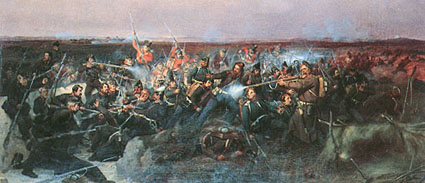
Kampen om Treldeskansen
Schleppegrells brigade gik til modangreb på den slesvig-holstenske brigade. I begyndelsen lykkedes det at slå det danske angreb tilbage, men som danskerne forberedte en nyt angreb, stod solen op, General Bonin kunne nu for den første gang overse slagmarken, og han indså at hans venstre flanke (1. Brigade) var slået og på flugt. For at redde resten af hans korps, beordrede han en almindelig tilbagetrækning imod Stoutrup. Så da Schleppegrells brigade angreb for anden gang, var slesvig-holstenerne allerede på tilbagetog, og danskerne indledte forfølgelsen.
Ifølge planen skulle den danske 5. Brigade under General Olav Rye (Ryes Brigade) bevæge sig nord til overgangen ved Rands Fjord, for at hindre en slesvig-holstensk tilbagetrækning eller forstærkninger i at ankomme den vej. Men før de nåede dette mål, var hans styrker nødt til at erobre slesvig-holstenernes stærkeste skanse – Treldeskansen. Men styrken på dette fæstningsværk blev alvorligt undervurderet af danskerne.

Olav Rye beordrede 2 af hans 5 bataljoner til at forbigå Treldeskansen, for at hindre forstærkninger i at nå skansen. De tre øvrige bataljoner, forstærket af batterierne Marcussen og Meincke, stormede skansen.
Olav Ryes død
Med alle hans styrker i kamp, ønskede General Rye at bevæge sig frem og selv observere kampen. Han beordrede sin adjudant tilbage, for at hente nye heste i stedet for dem, som de havde mistet i kampen.
Hans stabschef havde forladt ham i anden anledning. Da generalen red frem alene, blev hans hest dræbt under ham. Han fortsatte til fods til batteriet Marcussen og fik en ny hest. Han red yderligere nord for Treldeskansen med et kompagni fra den 4. Reserve Bataljon. Hans nye hest blev også skudt, og han fortsatte til fods. Kl. 3 om morgenen blev han ramt af to kugler, en i hoften og en i maven, og han døde kort efter.

Stedet for general Rye’s død er markeret med en sten idag. Da den blev opsat bestod området af bar mark. I dag er Fredericia vokset så meget, at stenen står midt på en gangsti i et villa kvarter
Ved Treldeskansen (skanse nr. 5) var kampene gået i stå, men så blev danskerne forstærket med den 8. Bataljon fra Moltkes Brigade og halvbatteriet Tillisch. Sammen med de styrker der allerede var tilstede, blev skansen erobret og 300 fanger taget. Kl. var da omkring 4 om morgenen.
Chefen for den slesvig-holstenske 1. Brigade (deres venstre fløj), major Stuckradt besluttede at trække sine styrker tilbage imod Egeskov over vadestedet ved Rands Fjord, til området nord for Rands fjord. Men han fik da melding om, at danske kanonbåde dækkede overgangen med deres kanoner, så han besluttede at gå vest og syd om Rands Fjord, imod Bredstrup.
På det tidspunkt havde den danske avantgarde (De Meza) forfulgt de retirerende slesvig-holstenere imod Egum og Stallerup, og de blokerede nu vejen for slesvig-holstenerne der trak sig tilbage syd for Rands Fjord. Omkring 750 mand blev taget til fange. Den slesvig-holstenske venstre flanke var næsten væk.
Ifølge General Bonins officielle rapport efter kampen, kunne den 1. Brigade kun mønstre 1242 mand af de oprindelige 5000.
- 1. Bataljon havde 1 officer og 70 mand
- 2. Bataljon havde 1 officer og 70 mand
- 4. Bataljon havde 1 officer og 170 mand
- 3. Jægerkorps havde 2 officerer og 130 mand
- 3. Bataljon som var flyttet til Bredstrup under kampen, var den eneste kampdygtige bataljon i brigade. Den havde mistet 203 mand.
Hele område imellem byen og Rands Fjord var nu fri for de Slesvig-holstenske tropper. I mellemtiden havde Schleppegrells Brigade bevæget sig nord for oversvømmelsen, drejet imod sydvest og rykkede frem imod skanse nr. 1 og 2. Forstærket af 2 kompagnier fra garnisonens 6. Reserve Bataljon, erobrede de dem i løbet af 1/2 – 1 time. For at dække tilbagetoget, forsøgte den slesvig-holstenske avantgarde (den højre flanke), at holde en stilling ved Stoutrup med to bataljoner, men de blev tvunget tilbage af det danske 3. Jægerkorps fra den 3. Battalion.
Lige nord for Stoutrup var den slesvig-holstenske artilleripark placeret (ved Heise Kro). Her tog det danske 3. Jægerkorps omkring 100 vogne, nogle kanoner og tusinder af kanonkugler og granater som krigsbytte.
Resten af dagen forfulgte danskerne slesvig-holstenerne, indtil de nåede en kløft vest for Fredericia. Men hovedkampen var over kl. 9 – otte timer efter at den var startet. Som et resultat af kampen blev der indgået en våbenhvile, og den 25. august forlod de sidste tyske tropper Danmark.
Kampen blev ikke genoptaget før i juli 1850 med kampen ved Isted, da 27.000 og 37.000 danskere stødte sammen over to dage, den 24. og 25. juli.
Tabene
Slesvig-holstenske:
- Døde: 5 officerer, 198 mand
- Sårede: 47 officerer, 1087 mand
- Taget til fange usårede: 32 officerer, 1636 mand
- Samlede tab: 84 officerer, 2911 mand (1285 døde og sårede)
Danske:
- Døde: 33 officerer, 479 mand
- Sårede: 42 officerer, 1302 mand
- Taget til fange usårede: 36 mand
- Samlede tab: 75 officerer, 1817 mand (1781 døde og sårede)
Læs mere:
Otto Vaupel: Kampen for Sønderjylland 1848 – 50 (1 – 3). 1866-68.
Frits Holst og Axel Larsen: Felttogene i vore første frihedsaar. 1888
N. P. Jensen. Kampen om Sønderjylland (1-4). 1913 – 16.