
Slaget ved Isted er det største slag der nogensinde er udkæmpet på dansk jord. Med den slesvig-holstenske hær var en korrespondent, William Russel, fra det engelske blad the Times. Han skrev flere beretninger hjem til de engelske læsere om slaget. De er gengivet her.
af Stuart Penhall
Selvom han er mest kendt for sine artikler fra Krim Krigen, begyndte William Howard Russel sin karrier i den afsluttende fase under den Første Slesvigske Krig, hvor han dækkede Slaget ved Isted. Dermed skrev han ikke alene en af de få engelsksprogede beretninger om konflikten, men også en øjenvidne beretning om slaget.
Russel havde tilsluttet sig den slesvig-holstenske hær kort tid efter starten på felttoget i 1850, og var kommet ret tæt på medlemmerne af staben. Han var dermed i en strålende position til at se udviklingen i slaget. Men før man læser hans beretning er lidt baggrundsinformation på sin plads. I 1850 stod den slesvig-holstenske hær alene overfor den danske hær, da deres tyske allierede, med tilskyndelse fra stormagterne, var kommet på bedre tanker end at støtte oprørerne. Hertugdømmernes regering var imidlertid besluttet på at fortsætte krigen uanset omkostningerne, og derfor havde den ansat den preussiske general Willisen og forøget hæren til omkring 30.000 mand.
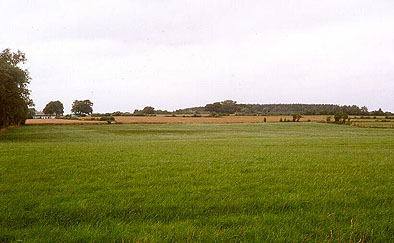
Felttoget begyndte da oprørerne rykkede frem til et område nord-vest for byen Slesvig, hvor de opførte en række fæstningsværker og afventede danskerne. Den 23. besluttede de sidstnævnte at angribe de slesvig-holstenske stillinger to dage senere, og med dette for øje rykkede de frem d. 24. Denne fremrykning afstedte kamphandlingerne som Russel var øjenvidne til.
Før man tager hans beretning til efterretning, må man huske på en ting. Dette er kampen som han så det, og skal ikke nødvendigvis tages for at være korrekt eller endelig. Dette er en mands syn på kampen som dækkede mange kvadratkilometer og indvolverede over 60.000 mand. Det giver os derfor en ide om hvordan kampen var, men kun det. For at forstå kampen er det derfor nødvendigt at studere en fuld beskrivelse af den.
Beskrivelse af kampen d. 24. (trykt i the Times d. 30. juli 1850)
Schleswig, July 24.
The first engagement between the Danes and the army of the Duchies since the commencement of hostilities took place this morning about two miles and a half in advance of General Willisen’s main position. His center has been for some days at Idstedt; and expecting a movement forward on the part of the Danes he yesterday occupied a thickly wooded height called Popholz, stretching east of the high road to Flensburg, and something more than two miles from ldstedt, with a body of Chasseurs, but with no intention of holding it. It was known that the Danes intended to send forward part of their forces to reconnoiter the ground, if not to attack the main body of the Holstein army.
This morning at an early hour the infantry remaining in the town of Schleswig were sent to the front; the last battalion left the town between 8 and 9 o’clock. By that time it was reported that the Danes were advancing, and everybody was on the alert. The General and his staff were some half mile further forward than Idstedt, in the middle of the plain, to the right of the Chaussée. A large mound, one of the many tumuli that are scattered over this part of the country and are called the “Huns’ graves” was the only elevation that commanded a good view of the wood directly in front, and upon and around the headquarters for the time was placed. The spot is a hard hour’s ride from Schleswig.
I again made use of the permission to follow headquarters, and arrived at the mound about 10 o’clock. All was quiet, though every moment the commencement of the firing was expected. The Danes had sent forward two or three guns and a body of infantry and riflemen through Siverstedt and Stendrup, and they were advancing by the Chaussée to Popholz; the woody hill that bounded the horizon to the north was the point to which all the glasses were turned. The staff had been out since 7 in the morning and by 11 o’clock the day had grown oppressively warm though a smart breeze from the east cooled the air a little.
Most of the officers were sitting or lying on the heath with which the mount is grown over; some score of dismounted dragoons and orderlies in attendance were walking their horses up and down the level field. The General was standing half-way up the mound conversing with the officers last arrived from the front, and those who had nothing to do had lit their cigars and prepared for another hour of inaction.
Somebody suggested a glass of wine from a supply at hand, and we were just drawing the cork when the report of a cannon from the end of the wood nearest the highest road brought us to our feet. The head of the Danish column had shown itself and was diverging from the road towards the wood; the balls from the Holstein guns, of which them were but two, must have crossed the Chaussée obliquely, but at the distance we could not see the Chaussée itself, there being some rising ground between us and it.
The Danes returned the fire from apparently an equal number of guns, and for about 20 minutes the cannonade was very sharp; no great harm was done, though the parties were within good shot range of each other; we could distinctly see the Danish cannonballs strike the ground and throw up clouds of dust as they bounded along the light sandy soil. In the meantime the Chasseurs in the wood had opened an irregular fire on the Danish skirmishers; but as the latter attacked from the other side of the wooded ridge and the Holsteiners were posted in the wood itself, we could see nothing but the smoke rising in white clouds at every shot from between the dark green beech trees.
The cannonade ceased, and the Chasseurs, according to their orders, withdrew from the woods towards us, firing as they retired, but not so rapidly. The guns were brought back to our left and posted so as to sweep the high road northwards; a squadron of cavalry that had been sent forward, but had not been engaged,. took up its position in front of us and to our right, but the Danes made no attempt to advance beyond the wood, and after an hour’s silence the officers decided that nothing more could be done today.
Could the Danes have been drawn forward into the plain south of Popholz, and in front of the real main position of the Holsteiners, the action might have become general. But they advanced no further than the edge of the wood. The whole affair did not last more than half an hour. In that time, the Holsteiners army lost eight men, killed and wounded, as far as, is the hurry of the moment could be ascertained.
8 o’clock p.m.
The prediction that all was over for the day was not verified. It was reported in Schleswig at 3 o’clock that the engagement had been resumed, and I rode out again to the mound or head-quarters at Idstedt, and in the way met but too many proofs that the fighting had been more severe than this morning in the carts conveying the wounded to the hospital prepared in the Schloss in Schleswig itself.
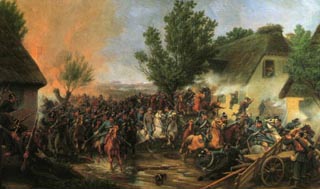
In order to ascertain what force the Danes had thrown into the wood of Popholz and the hills about Helligbek, a little village to the west of it, a Holstein battery and some infantry were ordered forward, the village was cannonaded, and in a short time the engagement became more serious than was intended, owing, it is said, to the impatience of the troops.
But the Danes held both positions against the attack, and the infantry were recalled. The second engagement was over about 6 o’clock. The battery, that commands the village or rather hamlet of Helligbek, was relieved, and I rode back with it on the road to Schleswig as far as the point where it turned off to join the brigade of the main body to which it belongs. The battery had fired almost 30 shots into the village and had sustained no loss, the infantry having ventured in and about the wood.
More to the west the Danes have advanced along the river Treene towards Ballingstedt, and in this direction, too, there has been a cannonade all the afternoon that did not quite cease till 7 o’clock. From the sound it was evident there were heavier guns in action, and it is stated the Danes have some 18 or 24 pounders in their batteries. Here, too, the outposts only have been engaged, and the Danes have advanced no further than north of Ballingstedt.
The country in this direction is open and level, and as the Holsteiners are weak in cavalry they will probably not attempt any attack on the Danes there tomorrow. On every other part of the line the decisive battle is expected to commence at daybreak. The Danes have a superiority in force, it is calculated, of about 4,000. The Holsteiners are in good spirits, and the officers say they are cool and steady under fire. No one here appears to doubt that the Danes must be beaten, but any anticipation of military events is very hazardous.
The general result of the operations of to-day is, that the Danish force has advanced, and has been allowed to occupy a post in front, whence an attempt was afterwards made to drive them that did not succeed; and that they have also advanced considerably on the left flank and with some hard fighting. On the other hand, the Holsteiners have lost none of their chief positions, all the skirmishing having been in advance of them.”
Hovedkampen d. 25. juli (trykt i the Times d. 31. juli 1850)
The general engagement expected after the skirmish of the outposts. described in my last letter, took place this morning. it was long and obstinately fought. was attended by great loss on both sides, and terminated with the total defeat of the Holstein army under General Willisen, which is at this moment (3 o’clock pm.) retreating through the town in tolerably good order to take up a position between here and Rendsburg.
It was known that the Danes would begin the attack at daybreak. or soon after: but they harassed the posts to the right of the Holsteiners by an irregular fire soon after midnight which kept the men under arms, and in some degree fatigued them before the battle itself’ commenced. The morning was cloudy, at half past 2 [am.] it began to rain violently, and continued to pour without intermission till nearly 9; so far from the weather being so sultry, as for the last 10 days, it was even cold, and all that had been suffocating dust the day before was soon converted into mud.
At half-past 2 I rode out towards ldsted,. on the high road to Flensburg, where the center of the Holstein army was placed, holding a ridge of thickly-wooded hill and having in front a wide plain, stretching away almost in a level to the north as far as the village of Heligbeck, and west to Bollingstedt and the little river Treene on which the left wing of the army rested in the neighborhood of Gammelund. A quarter of a mile in advance of the ridge the Holstein batteries had been already placed, and awaited the attack of the Danes.
They pushed forward their guns, infantry, and chasseurs from their position between Heligbeck and Bollingstedt in the direction of the Chaussée; and after some skirmishing opened a heavy fire from their field pieces just at 3 o’clock; the Holsteiners replied from their batteries, and for nearly two hours it was a battle of artillery alone, the balls sweeping the plain to the right and left of the high road. The Danish infantry, as it advanced in heavy columns, suffered severely during this time, particularly from a well served battery of 24-pounders, which, when they struck ploughed completely through the ranks.The infantry retired to form again, and the fire on both sides slackened on this point. By this time, 5 o’clock, the right of General Willisen’s position at Unter Stolk and Wedelspang was attacked, but the Holstein chasseurs, who fought with the utmost determination throughout the day, held their ground in the woods and enclosed grounds against every attempt to dislodge them. They had not to contend with so heavy a cannonade, and the men are generally good marksmen: thus they at times even followed the Danes as they retired but were frequently obliged to fall back on their former position: if anything, they advanced during the action: later in the day it became apparent that the main attack of the Danes was not intended to be on that wing.
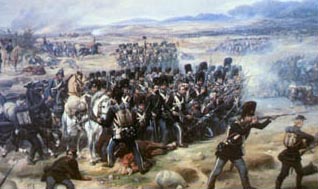
To the extreme left, also, the Danes were repulsed and driven to a considerable distance northward, and as the Holstein tirailleurs were evidently advancing, while the fire from the Danish center had abated, sanguine hopes were entertained of the result. But they were premature. The Danes advanced again, and the battle raged with more fury than ever, the artillery in the plain on all points firing incessantly.The roar of the heavier cannon, and the rush and hiss of the balls through the air, were the only sounds that fell on the ear; the irregular firing of the Riflemen and infantry was like the rattle of a toy compared to the clash of an enormous steam engine.
Another hour passed with little movement of the troops, but a continual cannonade. All that was visible, except the flash and smoke of the guns, were the batteries galloping across the field from point to point, appearing for a few minutes on a rise of the ground, or under the canopy of smoke when lifted or driven aside by the wind. In the meantime, the usual scene presented by the immediate rear of an army in action was becoming more and more deplorable; troops of men carrying or supporting a wounded comrade, scarcely able to drag himself along: others carrying the dead, and laying them down with singular care, as if they were only asleep, and might be awakened by too rough a motion.
The thought crossed the mind involuntarily that the attention had been better bestowed on the living of whom too many were in sore need of it. There was a deficiency of wagons to carry the wounded back to Schleswig and moreover, the peasants did not relish the task of driving so close up to the firing. It required something like threats from the soldiers to get the Boer, as they call him, who in any circumstances moves but slowly. under the present ones to move at all: but it was generally done at last, though for the scarcity of vehicles there was, unhappily, no remedy. The wounded horses, if the case is hopeless, are shot, and every now and then the report of a merciful musket putting an end to the agonies of some poor animal, is another of the many episodes of the conflict that a spectator has leisure to observe: but they are but episodes: the great rush of battle goes on, perfectly reckless of life or suffering in any form.At 7 o’clock the effect of the firing began to appear all over the field: scattered huts and farm-houses that had been set on fire by the shells. and were burning unheeded. In a Holstein battery placed to the left of the Chaussée a powder wagon, struck by a shell, exploded and killed four horses and two men. I crossed a subaltern officer attached to this battery later in the day, while he was describing to some comrades his furchthar pech. or terrific bad luck, at this point. He said he had had three guns dismounted, his horse shot from under him, and a powder-wagon blown up, within a quarter of an hour. I thought his own escape might have been considered a piece of good luck to balance the opposite. The battle went on, still without apparent result the Danes had not advanced either on the right or left and it was becoming evident that the center was the point on which all their strength would be directed.To the left of the Jagers of each army had been engaged on the open ground towards Bollingstedt and Heligbeck but their fire was hardly noticed amid the thunder of the cannonade on the center: but at 7 o’clock straggling parties of Danish prisoners began to be brought to the rear, most of them wounded. In the latter case they were treated as well by their late opponents as any of their own comrades could have been. They were sent on to Schleswig as quickly as possible, and often side by side on the same bundle of straw with a German. In the midst of national hatred, displayed in its fiercest form, there was no trace of individual animosity to be discovered, nor did a word of insult or reproach pass between any of the hundreds of rival races thus brought into contest. it seemed as if they both submitted silently to some overwhelming destiny with which neither could contend.
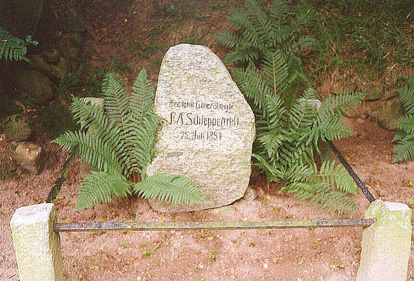
The changes of the line of battle from 8 o’clock till between 10 and 11 were scarcely perceptible. The Danes had again retired, and the conflict was continuing on the right and left wing with the same result: the Holsteiners were holding their ground. But the hours that had elapsed since daybreak, and the exertions made in repelling the repeated attacks, had told on the physical strength of the Holsteiners, and it was beginning to be seen that they had to deal with an enemy that would grant then no respite. Other signs of disorder, and of that state of matters for which there is no better name than “something wrong,” also began to appear, even to an unprofessional eye.
The number of officers had always been two small, and now whole companies had with them only a few sergeants or corporals, who have not the influence of their superiors: the Danish rifles had disposed of most of the latter Several of the infantry were mere recruits, young, and brought into fire for the first time. They wavered, and became unsteady. Large groups of soldiers of different regiments were seen gathering in the rear, with no one to rally them; others were straying away in the fields and woods or going further to the rear; the staff were too few in number, and, like the troops, had been too hard worked; most of them had ridden down three or four horses each, and still the officers at distant points were heard complaining of the want of orders.
The ammunition had begun to grow short, and although a supply was instantly sent up from Schleswig, the wagons got mixed up with the straw and forage carts that covered the high road, and were not extricated with sufficient celerity. The Danes had as yet gained no ground, but it was just as certain they were not beaten, and at midday, when they made their last and successful attack, it was seen why it had been impossible to beat them. They had a strong reserve, which, fresh and vigorous, was sent against the Holstein force, of which almost every available man had been for many hours engaged.
The advance was covered by a larger number of guns than had yet been brought into action, and by a strong body of cavalry. The firing was now for an hour heavier than ever, and at last the Holstein center gave way and retreated on Schleswig the right wing bent back and retired towards the town; the left fell back through the open ground to the west. By a quarter past 2 the army was m full retreat, but not in disorder; nor were they molested in retiring by the enemy.
The members of the Holstein Government, who were in Schleswig, fled immediately to Kiel, on hearing that the battle was lost; all the officials also left the town; the Post-office was shut, the doors locked, and all business suspended. A train of carts, wagons, tumbrils, and cannon passed slowly through the town from 3 till 5 o’clock; the inhabitants brought out refreshments for the troops, which they distributed as they went along.
Of the loss in killed and wounded no accurate notion can be formed; about 400 Danes and Germans lie in the Schloss of Gottorp, part of which is converted into a hospital. But those who can bear transport are sent on to Kiel and Altona, while those who fell in the last and most fierce attack have not been brought in; in the range of woods to the right. and the wild heaths to the left, there must also be hundreds who have not been picked up, but who lay on the field probably all last night.
To the west, beyond Gammelund. a Danish prisoner stated that a battalion of his corps. Chasseurs, got among the bog and morass of what is called the Moor, and were nearly all shot down by the Holsteiner Riflemen before they could extricate themselves.
The Holsteiners retreated by the Chaussée along the south bank of the Schlei towards Eckernforde. Colonel von der Tann covered the retreat and before quitting the town threw up a barricade in the main street to impede the march of tile Danes.
The action was fought on both sides with great obstinacy, and the Holstein troops generally behaved gallantly for so young an army. The Danish soldiers are on the average much older men. The Holsteiners must have underestimated the force of the Danes, for they cannot even now explain how the enemy could have brought up fresh troops after three attacks. The victory, that may be called the battle of Idstedt, is decisive for the present of the fate of the duchies.”