
Af JG
I den internationale presse, herunder aviserne The Milwaukee Sentinel 22. august 1918 og The Daily Mail 7. aug. 1918, stod der skrevet (oversat):
”En dansk ingeniør har for nylig taget patent på et apparat som han har udviklet og konstrueret, og som han kalder ”Den automatiske soldat”. Den består af en stål cylinder der normalt er inde i en større cylinder, det hel sænket vertikalt ned i jorden. Ved hjælp af en meget simpel mekanisme som sættes i værk ved trådløs telegrafi hæves den indre cylinder til en højde af omkring 18 tommer (ca. 45 cm) over jorden; på samme tidspunkt affyrer en automatisk riffel monteret på den indre cylinder 400 skud i enhver given retning.
Disse ’automatiske soldater’ kan kontrolleres fra en central position omkring 4-5 mil (6-7 km) bag forsvarslinjen. De kan kun ses af fjenden, når de hæves over jorden, og at installere dem i jorden er en ganske simpel operation. Fra øvelser allerede udført er det blevet bevist/påvist, at nogle få hundrede af disse stålsoldater let kan forsvare en stilling uanset hvor talrig den fjendtlige styrke er. Da de er naturligt upåvirket af panik eller uorden skyder de deres 400 skud af sted uden at tøve”.
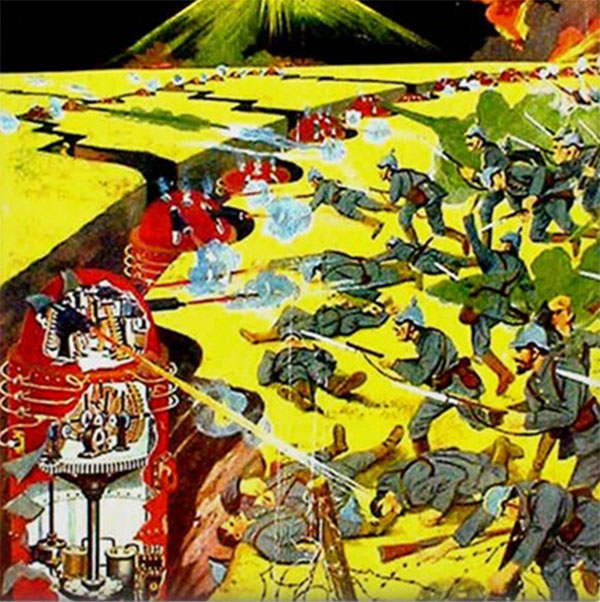
Idéen blev taget op i oktober 1918 udgaven af Electrical Experimenter, som en Hugo Gernsback, også kaldet ”Father of Science Fiction”, præsenterede som den mest radikale idé for fremtidens krig. Gernsbachs billede af en kamprobot var inspireret af ingeniørens patent. Under tydeligt indtryk af 1. Verdenskrig viser bladets forsidebillede en flåde af droids, der smadrer en tysk fjende.
At den omtalte ingeniør benævnes som dansk skyldes formentlig, at ingeniørens firma var beliggende i Danmark, og at man i udlandet har svært ved at skelne mellem skandinaver, der set udefra ligner hinanden. For opfinderen og patenttageren på ”Den automatiske soldat” var nemlig norskfødte Nils Waltersen Aasen (1878-1925), der som ung mand tog en uddannelse på mine- og signallinjen ved fæstningsartilleriets underofficersskole på Oscarsborg i 1903, og herefter blev fastlønnet sergent ved mine- og signalkompagniet samme år, hvorfra han i øvrigt søgte afsked 1. oktober 1911. Han tog patent på den første type moderne håndgranat i 1906, der velvilligt blev financieret af Dansk Riffel Syndikat, da ingen i Norge ville.
Våbenfabrik i Danmark
Det resulterede i oprettelsen af Det Aasenske Granatkompagni beliggende i Københavns-området, også benævnt i tidens medier som firmaet Defenseur Copenhague, med en bank aktiekapital på 250.000 rigsdaler til produktion af en ny slags håndgranat, patenteret i alle lande. Firmaet bliver anmeldt handelsregisteret som nystiftet A/S 17.7.09 (trådte i likvidation i 1933). Aasen regnes derfor som faderen til den moderne håndgranat.
En farlig branche
Med sin militærfaglige baggrund tog han fat på egenhændigt, at udvikle forskellige granater og videreudviklinger af dem selv, og det var bestemt ikke ufarligt. Aasen selv opgives da også at have 37 ar på kroppen efter splinter og kugler, og det var bestemt ikke ufarligt for militære autoriteter og pressen, at overvære prøver på de nye våbens kunne. Herning Folkeblad – Vestjylland skriver 10. juni 1910, at en planlagt sprængning i maj på Amager Fælled af otte håndgranater måtte afbrydes efter blot to sprængninger, da tre personer, der befandt sig i et halvt hundrede alens afstand (ca. 30 meter) blev ramt og såret af flyvende jernstykker. Værst gik det ud over en redaktør Andree Lützen, der blev ramt i ansigtet og stærkt blødende faldt besvimet til jorden.
Antiluftskyts
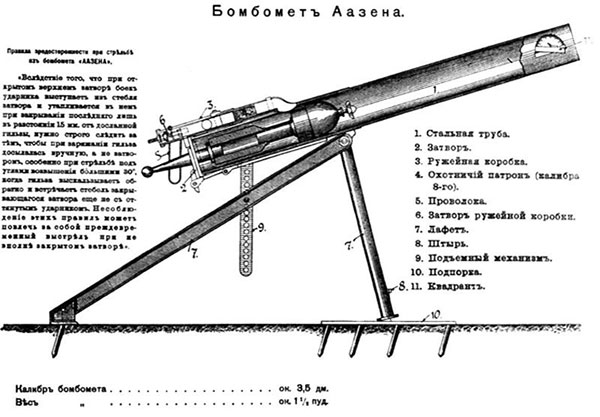
Men sådant et uheld slår ikke en ægte entreneur ud: Siden den famøse sprængningstest havde Aasen stået i spidsen for udvikling af nye våben. Herunder et projektil til nedskydning af luftskibe og flyvemaskiner, der vejede tre gange så meget som en almindelig håndgranat, nemlig 3 kg., indeholdende 400 sprængpartikler, der udsendtes ved mindste berøring af fx ballonstof eller flydele. Desuden kunne den nedkastes over tropper i åben mark og bag fæstningsanlæg, og gøre et område på 800 kvadratmeter omkring træfpunktet usikkert.
Landminer
Et andet våben var en ny type håndgranat, kaldet A4, der efter at have ramt jorden kunne bringes til at stå ret op og ned ved hjælp af nogle knaster, hvorefter den sprænges i en højde af kun 2,5 meter over jordoverfladen. Granatens kugler havde effekt på op til 60 meters afstand fra sprængpunktet. En tredje type granat, kaldet A2 med en vægt på 1,6 kg, kunne bruges til at underminere terrænet foran en skanse, hvis fx i alt 28 granater graves ned på et areal på 220 x 30 meter.
International konkurrence
Udviklingen indenfor våbentyperne var i rivende udvikling, hvilket den hyppige erhvervelse af nye patenter afslører, hvor Aasen var i stærk konkurrence med særligt den britiske opfinder og sprængstofekspert, Marten Hale; i 1906 havde Hale fået et håndgranat-patent, i 1907 gik to til Aasen, i 1908 var Hale den eneste på banen med et geværgranat-patent, og 3 yderligere geværgranat-patenter gik til Hale i 1909. Men i 1911 fik Aasen et geværgranat-patent, Hale tre, mens to gik til andre sider, og i 1913-14 blev endnu 6 patenter på granater til kast eller geværer taget.

10’erne: Krigens årti
Det var det helt rigtige tidspunkt at udforske nye våbentyper i, da særligt Balkan hærgedes af krige, der gav Aasens våbenhandel vind i sejlene. Først gjorde Montenegro, Serbien, Grækenland og Bulgarien oprør i 1912 mod det tyrkiske Osmanner-imperie, hvilket efterfulgtes af krigen i 1913 mellem Bulgarien på den ene side og Serbien, Grækenland, og siden også Rumænien på den anden side.
I Ringsted Folketidende står der 14. november 1912 skrevet, at produktionen af håndgranater til Balkan var så stor, at de op mod 100 mand på fabrikken ’Defenseur’ ikke kunne følge med, hvorfor en del produktionen er blevet overført til Carl Lunds fabrikker, der var en metalvarefabrik beliggende på Danasvej (dengang Bernstorffsvej) på Fredriksberg.
På forkant med udviklingen
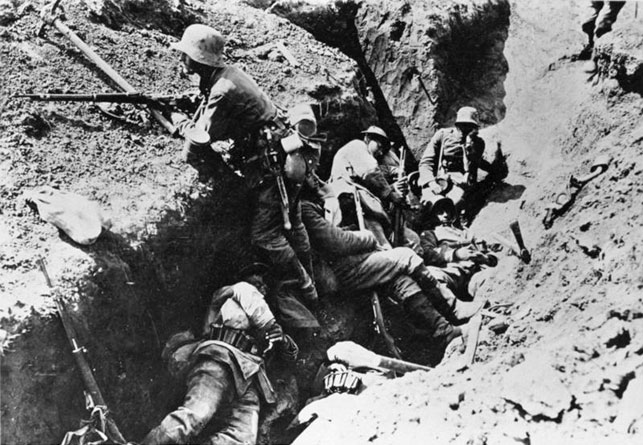
Trods efterspørgslen og erfaringerne fra Balkankrigene, blev håndgranaterne – ligesom maskingeværet – anset for defensive våben af den militære fagekspertise, og som dårligt anvendelige uegnede til offensive operationer, der var den primære militære doktrin op til 1914. Ingen havde en klar idé om, hvordan man brugte den nye våbentype, men det skulle kampene i 1. Verdenskrigs skyttegrave lave alvorligt om på.
Beskrivelserne af et tysk modangreb som svar på en fransk storm, under slaget ved Somme 1916 lader ingen tvivl om håndgranatvåbenets virkning:
”Men 4. kompagni samler sig hurtigt til et modstød. En uforfærdet gruppe ført af de to tapre sergenter Rave og Clausen går fra skyttegraven i kødet på den indtrængende fjende med håndgranater”. Og lidt senere; ”Frygteligt raserer de tyske håndgranater blandt modstanderne, der bliver skubbet tættere sammen”.
Masseproduktion til verdenskrigen
Briterne fandt ikke Aasens granater tilstrækkeligt gode, der dog havde bedre held med franskmændene, som i marts 1915, hvor briterne stadig var i færd med at afprøve Aasens granater, allerede producerede 1500 Excelsior-håndgranater om dagen, hvilket snart skulle øges til 10.000 om dagen. 1. Verdenskrigs umættelige behov betød, at Aasen kunne oprette 13-14 fabrikker i Frankrig, der i alt skulle levere 16,5 millioner granater og 15.000 skyttegravskanoner til den franske hær i verdenskrigens forløb.
Fra rig stormogul til fattigdom
Selvom det ikke blev til noget med den ”automatiske soldat”, hvis patentering berømtes i datidens internationale presse, blev Aasen naturligvis stenrig af sin våbenproduktion. Han opgives da også både at have ejet et slot i Paris og et palads i Nice. Alligevel døde han ukendt og fattig af tuberkulose. 15. februar 1916 skriver ’Social-Demokraten’, at selskabet ’Carl Lunds Fabrikker’ havde modtaget en million francs fra et håndgranatpatent, der blev solgt til Frankrig – et patent, som selskabet ’Defenseur’ dog også gjorde krav på. Netop uenighed om ejerskab og rettigheder blev årsagen til Aasens deroute.
Nils Walter Aasen døde i USA af tuberkulose i 1925 i Wisconsin på jagt efter penge. Men blot ét blik på ”Den automatiske soldat” viser, at Aasens idérigdom og visioner ikke fejlede noget. I dag, 100 år senere, er fjernstyret kampudstyr ikke længere utopisk.
Læs mere:
Reinventing Warfare 1914-1918 – Novel Munitions and Tactics of Trench Warfare, Anthony Saunders
www.klikk.no/produkthjemmesider/vimenn/article924445.ece
http://www.arma-dania.dk/public/timeline/_ad_granater_view.php?editid1=49
Milwaukee Sentinel, Paul Gernsbach, 7.8.1918
Jyllands Posten 27. Maj 1913 (link)